
Saturated Fat - is it all bad? Part 1
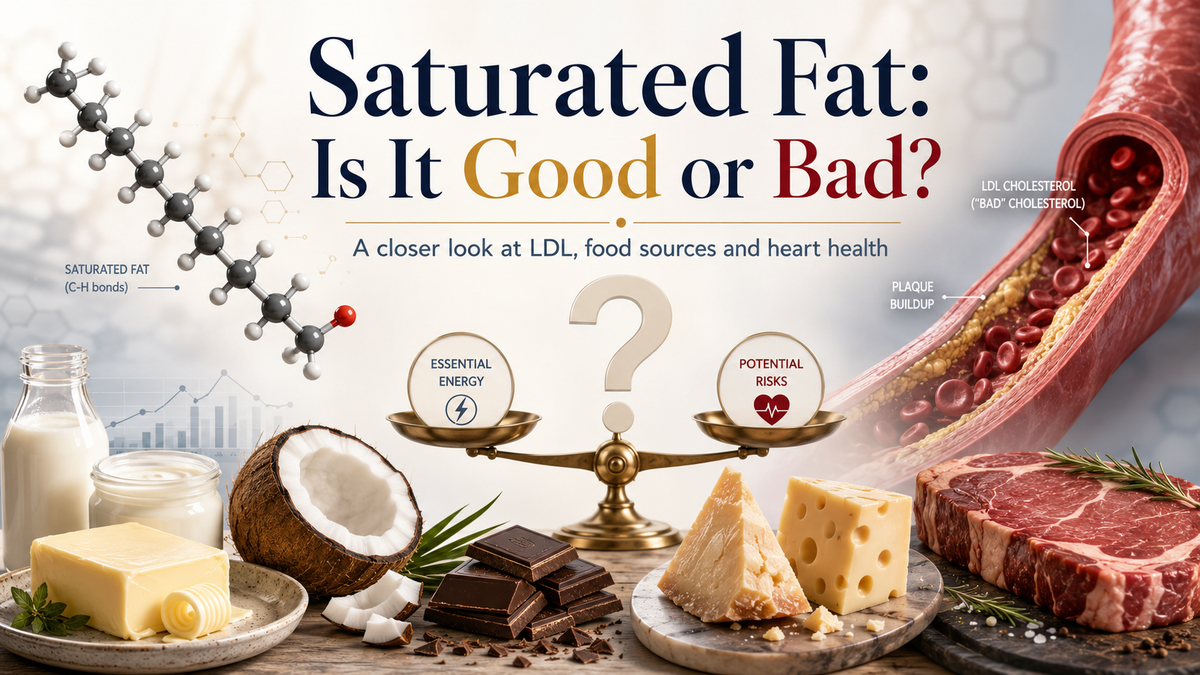
Saturated fat (SFA) is bad for you. That’s the common perception, and on the whole a safe perception. However, as ever with health, its not the full picture. SFA is not one thing, its not just one molecule (chemical structure), it doesn’t always behave the same way and it interacts with other molecules (foods as far as we are concerned) to cause different impacts on our health.
My goal here is to explain what saturated fat is, and is not, when it is bad, when it isn’t and what impacts it can have on our health.
Where it all began
This all began when at the age of 51 I had a slightly elevated cholesterol result, to be more explicit, my LDL was 3.2. This is a bit high, but not too high, so I endeavoured to reduce this back to a value of 2.7 (my previous reading). I cut out the bad foods and cut down on alcohol. 6 months later and I tested again. A reading of 3.8! It had gone up. What was going on, I had cut out my chocolate treats, moved to almond milk lattes and was drinking less than 7 units a week. Where was I going wrong and what hope was there?
To keep things simple for now, my basic understanding was that consumed saturated fat went straight to my arteries, clogged them up and somehow caused cholesterol to increase. We will get into that later.
Anyway, this is where my research began, I took up a subscription with MyFitnessPal and logged everything. This was shocking. I walk, run and cycle a lot so need a lot a daily calories (often 3000) which often came in the form of protein bars and shakes. To get a meaningful reduction in LDL I was targeting a maximum of 15g saturated fat a day. UK guidelines state that no more than 10% of our calories should come from saturated fat. For me on a rest day that’s around 200 calories or around 22g of saturated fat, but I wanted to hit this hard and took an aggressive stance of 15g. For reference, a Mars bar contains around 3.8g (a quarter of my daily goal, a chicken breast contains around 1.1g and quarter pounder beef burger with cheese has around 13g (almost my daily goal). Surprisingly to me, the protein bars I was consuming had 3.8g, the same as a Mars bar and my protein shakes 4.8g! I could easily consume 2 or 3 protein bars and at least a shake each day, after all, protein is king – isn’t it – that’s a whole other topic! Add that up and we have over 16g of saturated fat and we haven’t even considered main meals. I reckon I was consuming well over 30g per average day and over 40 or 50g on days I went out, weekends etc. It’s no wonder my LDL was increasing.
Mission Impossible
So the new mission was to cut everything out that contained saturated fat. So out went protein bars, shakes, chocolate treats (white, milk and dark). Interestingly a bar of dark chocolate can have 24g saturated fat in a 100g bar. Cakes were out, obviously butter, cream, full fat, even reduced fat yoghurt. Other surprisingly foods containing saturated fat included coconut products, avocado, olives, olive oil. There was a lot to cut out but it had become clear to me, cut the fat = cut the cholesterol and live a long healthy life. That was my new model. I did this and 6 weeks later my LDL had reduced by 15%, that’s pretty good. Of course, this wasn’t a scientific study but its probably a fair assumption it was due to my change in diet. Keep this up and I’ll be back in the safe zone in no time.
Back to confusion
This moment of clarity was then followed without outright confusion when my wife uttered the following relatively simple sentence. But what about the Mediterranean diet which is full of olives, olive oil and avocados, and what about eastern diets, some of their meals are heavily coconut based but they historically haven’t had high heart disease rates. Should you not just focus on moderation? My wife had of course spotted a large hole in my new model. She hadn’t proved saturated fat was harmless but it’s clear I didn’t have the full picture.
So my goal in this 7 part series of articles is to explain at a high level what saturated fat is, how it affects LDL levels and how to manage it in your diet.
Further reading / sources
A straightforward introduction to saturated fat, where it is found, how much is recommended and practical ways to reduce it.
NHS - How to eat less saturated fat
A much more detailed look at saturated and unsaturated fats, including why different saturated fatty acids can have different effects on LDL cholesterol.
HEART UK - Dietary fat recommendations
The evidence and reasoning behind international recommendations on saturated fat, including what we should replace it with.