
Saturated Fat - Is it all bad? Part 4. The Disease
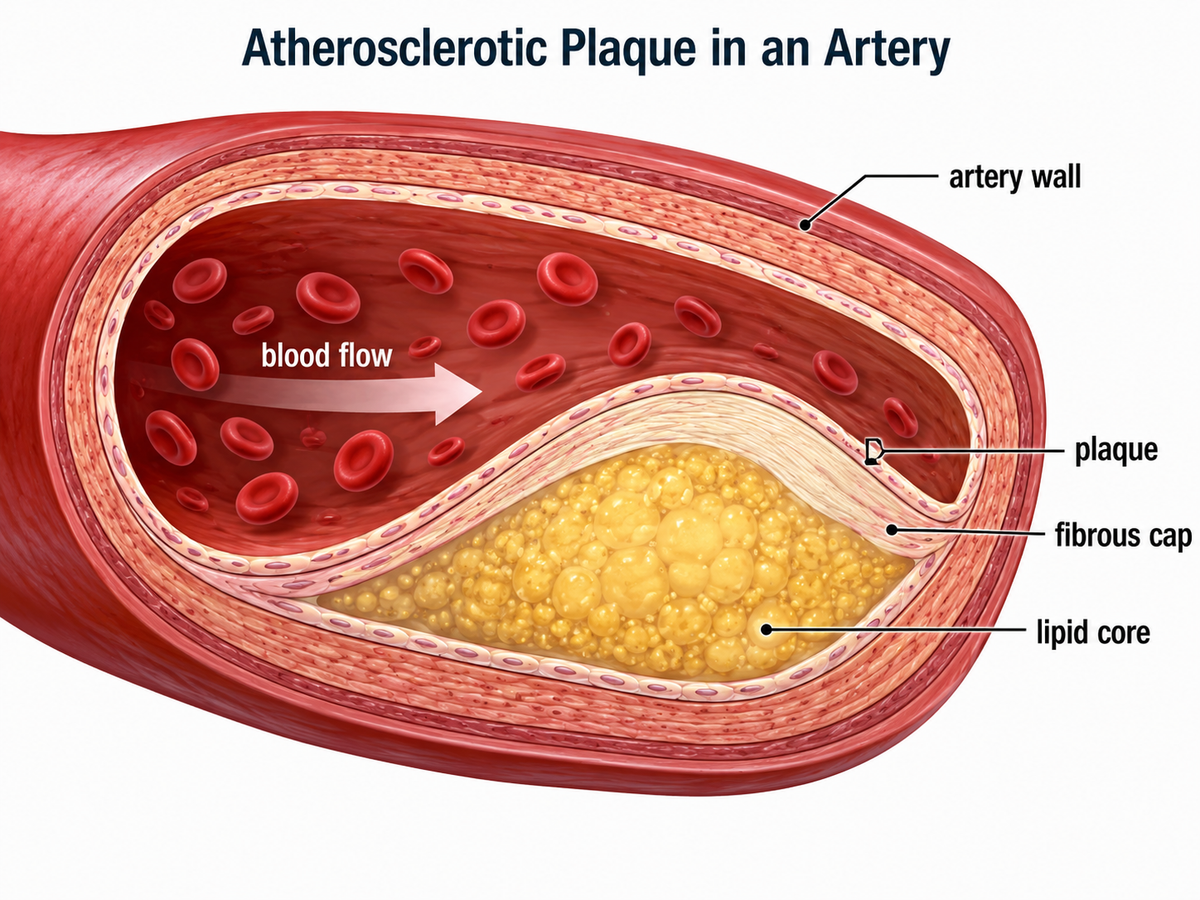
Before getting into how some saturated fat leads to an increase in LDL levels, we need to understand what the disease is. We have all heard of heart disease, or more specifically for our purpose, coronary artery disease, so let’s dig into what that actually is.
Arteries
Our arteries are the tubes that allow our heart to pump blood all over our body. That blood supplies the cells with oxygen and nutrients. It’s vital these tubes are kept clear so that blood can flow as freely as possible. Any blockages can restrict the flow of oxygen, which is carried in the blood, to vital organs, including the heart.
Of course, any artery can become blocked but in the case of coronary artery disease we are talking about the ones that provide a flow of oxygen to the heart, which in turn operates to pump blood around. It’s not the blood getting pumped out of the heart that becomes blocked but the arteries providing the much-needed oxygen to power the heart.
Atherosclerosis
As we discussed earlier, LDL particles circulating in the bloodstream can be what is called atherogenic, this means, they can cause atherosclerosis, which in short is a build-up of plaque within the artery wall, eventually, restricting the flow of blood. This isn’t just LDL particles sticking to the walls, its more complex, and as we will see this complex process is worth understanding because it shows that several lifestyle factors are at play here.
If we imagine the blood flowing through our arteries and these LDL particles flowing around with it. These particles are small enough to enter the artery walls and the more there are in the bloodstream, the greater chance there is of them entering the artery walls. The LDL particle becomes trapped and then starts to undergo a chemical transformation through a process called oxidation. The immune system detects these oxidised particles and to deal with them, send in white blood cells, as it would with any infection or foreign object. The white blood cells consume the oxidised particles and become foam cells, the foam cells eventually die, leaving behind their contents and the body covers the contents with a fibrous cap. This mass that is left behind can narrow the artery and restrict the flow of blood and thus flow of oxygen to the heart. This can cause angina and is normally managed with medication.
Plaque Ruptures
The real problems begin if the cap breaks. The contents are exposed to the circulating blood which reacts by forming a clot, much the same when you cut yourself. However, this clotted blood can completely block the artery and cut off the flow of blood and oxygen to the heart, this is what we call a heart attack.
There are several aspects to this process that aren’t purely just the result of high LDL levels, general lifestyle plays a large part in helping this worse case scenario transpire. High blood pressure, diabetes and smoking all contribute, and we will see how next.
Further Reading / Sources
British Heart Foundation: Atherosclerosis
A good explanation of how plaque leads to heart attacks.
European Atherosclerosis Society: How LDL causes atherosclerosis
This is the detailed version of the story. LDL entering and becoming retained in the artery wall, immune response, foam cells and plaque development.