
Saturated Fat - Is it all bad? Part 5 - The Risk Factors
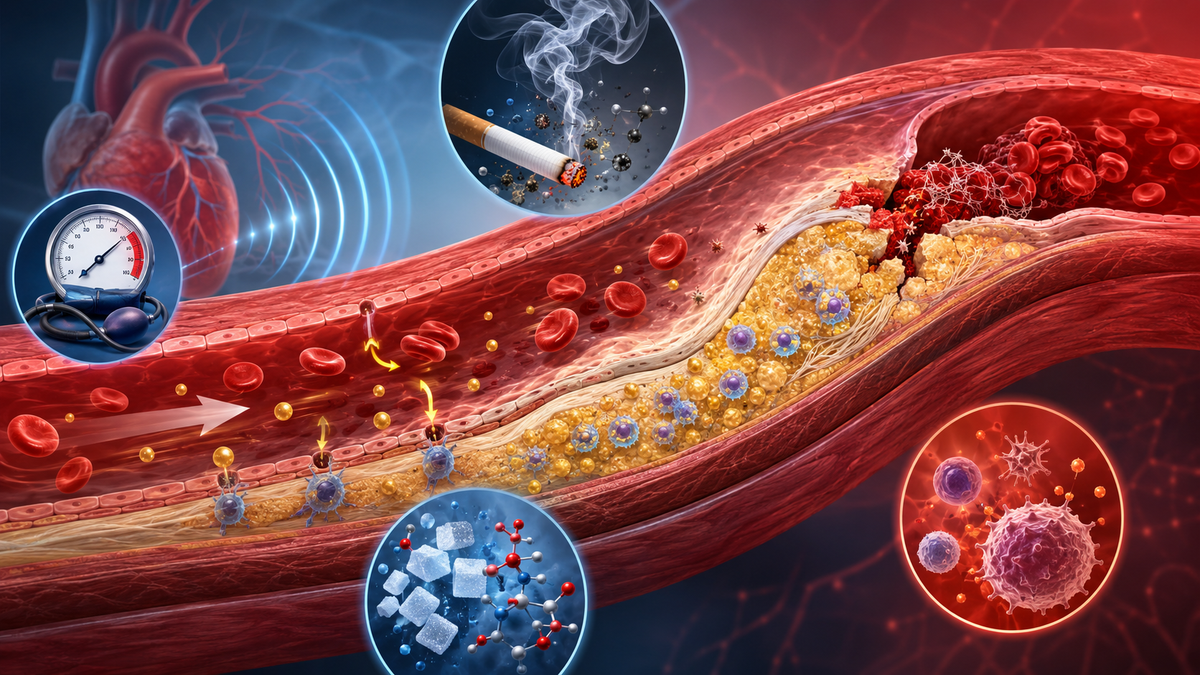
So to recap, high levels of LDL particles in the blood stream results in some particles entering and becoming trapped in the artery wall, the LDL particles become oxidised and then consumed by white blood cells, which die and leave behind debris. This debris is capped but can become unstable and rupture, when it ruptures, the blood can clot around it which can cause a blockage in the artery, resulting in a heart attack.
This sequence shows that LDL isn’t the whole story, the number of particles matter but also so does the environment they exist in. Smoking, high blood pressure, diabetes and inflammation all affect the process and can have a significant effect on the outcome. We will cover these individually next.
High Blood Pressure
High blood pressure pushes blood too hard against the artery walls and can damage the delicate lining. Where damage exists, LDL particles are more likely to penetrate the artery wall and become trapped.
Smoking
Smoking floods the bloodstream with chemicals which ultimately causes oxidation both in the blood stream and in the artery wall, making it more likely to contribute to plaque formation. The chemicals in smoke can also alter the artery wall making it easier for LDL particles to become trapped. Smoking also makes the blood more prone to clotting which increases the danger when a plaque ruptures. Smoking also raises blood pressure which comes with its own risks.
Diabetes
Diabetes can cause sugar to bind to the artery wall, which can make penetration of LDL particles more likely. Sugar can also bind to LDL particles, changing the way they behave and making them more likely to contribute to plaque formation.
So, you can see how risk factors can combine with high LDL to significantly increase the risks of atherosclerosis.
Let's get back to the fat now and look at exactly how some saturated fats can cause our LDLs levels to rise.
Further Reading / Sources
British Heart Foundation: Atherosclerosis
A clear overview of the main factors that increase the risk of atherosclerosis, including smoking, high blood pressure and diabetes, and how these can ultimately lead to heart attack or stroke.
NHS: Causes of coronary heart disease
Useful because it looks at the major risk factors individually. It specifically discusses smoking, blood pressure, cholesterol and diabetes, including smoking’s effects on the artery lining and blood clotting.
European Society of Cardiology: Cardiovascular disease prevention guidelines
This is the much deeper version. It identifies apoB-containing particles/LDL, high blood pressure, cigarette smoking and diabetes as the major causal and modifiable risk factors for atherosclerotic cardiovascular disease.