
Saturated Fat - Is it all bad? Part 3 - Cholesterol
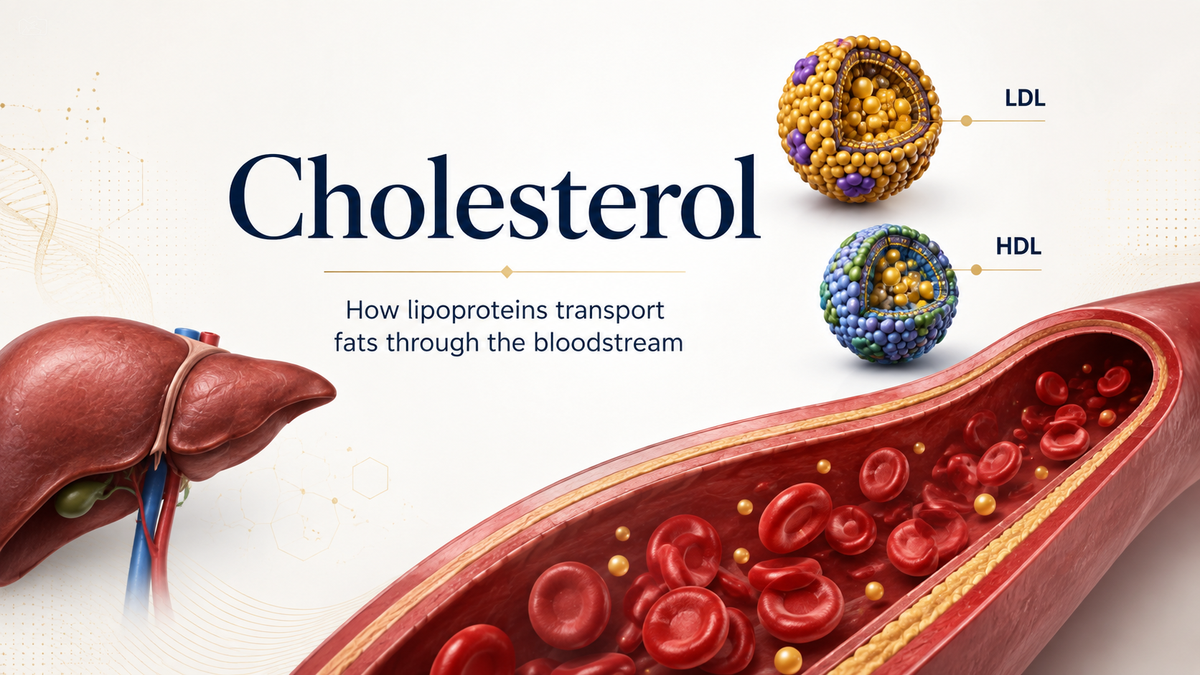
Before getting into various types of saturated fatty acids, its probably worthwhile talking about cholesterol, after all, the reason we are interested in fat is because of the impact it has on our cholesterol levels and ultimately our heart health.
Cholesterol is a type of fatty substance called a lipid that is used by our body to perform a variety of very important functions, and we cannot live without it. It is delivered to the cells throughout our body via our bloodstream. Because cholesterol is a fat, it cannot dissolve into our blood, which is water based. The same way oil will not dissolve when you see it spilled on water. To get around this, the body packages the cholesterol inside other particles called lipoproteins. These lipoproteins contain both fats and proteins in varying amounts and the ratio of fat to protein as well as the size of the particle defines what type it is. For the purpose of this investigation, I focused on the following particles:
Low density lipoproteins (LDL)
High density lipoproteins (HDL)
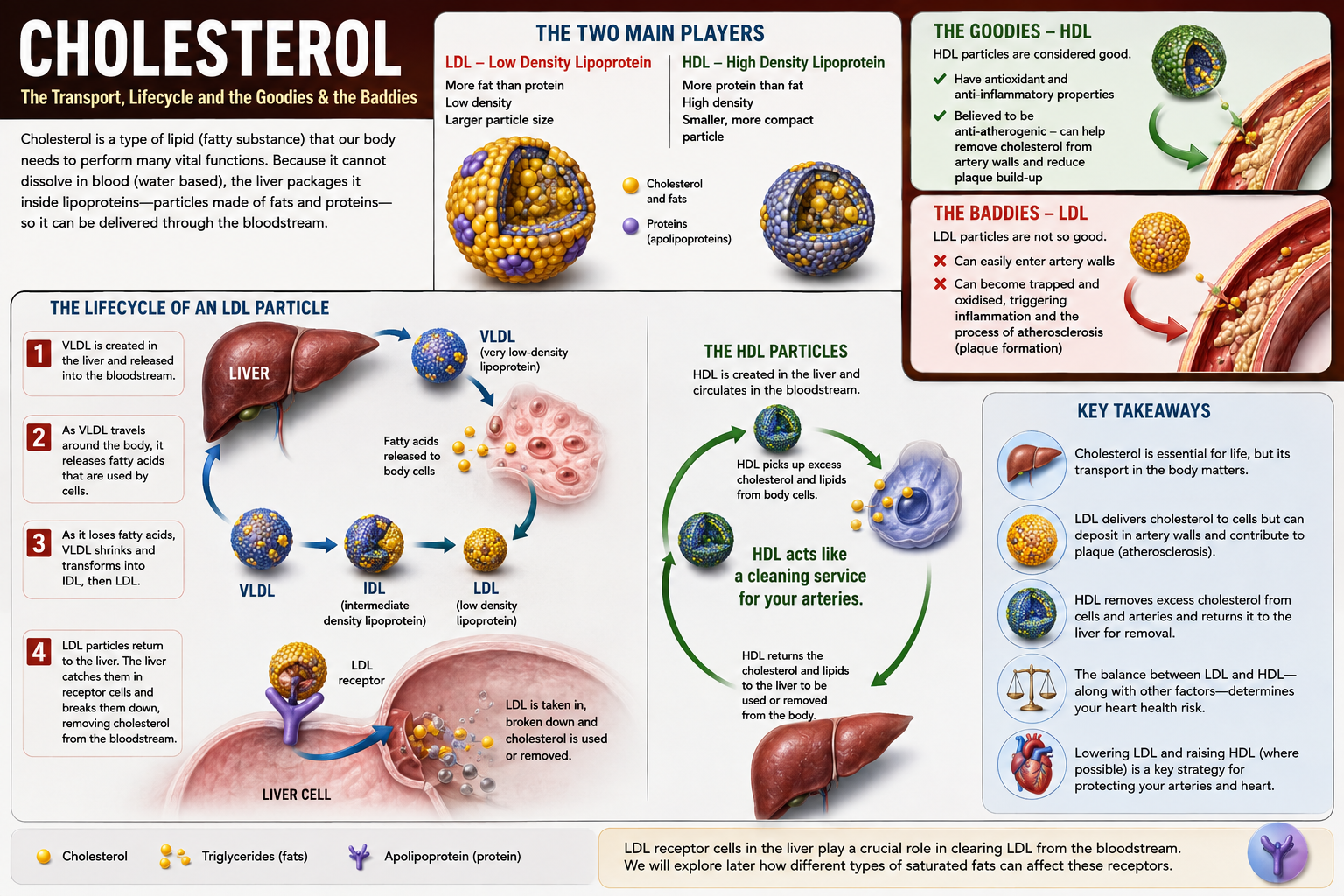
LDL’s contain more fats than protein and are considered low density, they come in a variety of sizes but are larger than HDL particles.
HDL’s contain more protein than fat and are considered high density, they come in a variety of sizes but are smaller and more compact than LDL.
The lifecycle of an LDL particle
When you consume food, your intestine breaks down the nutrients and constructs them into packages the body can use. To begin with VLDL (very low-density lipoproteins) are created in and released by the liver into the bloodstream. As VLDL’s travel around the body they release fatty acids that are used by cells, as the particle loses fatty acids they eventually transform into LDL particles. As these LDL particles pass into the liver, the liver catches them in receptor cells and breaks them down. As we will discuss later, these receptor cells are a very important piece of our puzzle.
The HDL particles
These particles are again created in the liver and circulate in the bloodstream. HDL articles absorb cholesterol and lipids that are released by cells. Again, the liver clears these away.
The goodies and the baddies
HDL particles are considered good, they have antioxidant and anti-inflammatory properties, and they are believed to be anti-atherogenic, meaning they can help stop plaque building in arteries.
LDL particles are not so good, they can easily enter artery walls and begin the process of atherosclerosis, i.e., plaque formation. We will cover this process later.
Further Reading / Sources
HEART UK: What is cholesterol?
A clear introduction to cholesterol, triglycerides and the lipoproteins that transport fats around the bloodstream.
HEART UK: HDL cholesterol
A closer look at HDL, what it does and why simply calling it “good cholesterol” doesn't tell the whole story.
European Atherosclerosis Society: LDL and cardiovascular disease
A comprehensive review of the evidence showing why LDL-containing particles play a causal role in the development of atherosclerotic cardiovascular disease.